Saturday, July 28, 2007
 The orders had arrived with the usual lack of ceremony or even common courtesy, by way of the Oyster Stew traditionally prepared each Thursday as the Plat du Jour by Miles Blundell, who, that morning, well before sunup, had visited the shellfish market in the teeming narrow lanes of the old town in Surabaya, East Java, where the boys were enjoying a few days of ground-leave. There, Miles had been approached by a gentleman of Japanese origin and unusual persuasiveness, who had sold him, at what did seem a remarkably attractive price, two buckets full of what he repeatedly described as "Special Japanese Oyster," these being in fact the only English words Miles would recall him having spoken. Miles had thought no more about it until the noon mess was interrupted by an agonized scream from Lindsay Noseworth, followed by a half minute of uncharacteristic profanity. On the mess-tray before him, where he had just vigorously expelled it from his mouth, lay a pearl of quite uncommon size and iridescence, seeming indeed to glow from within, which the boys, gathered about, recognized immediately as a communication from the Chums of Chance Upper Hierarchy.
--"Don't suppose you happened to get that oyster merchant's name or address," said Randolph St. Cosmo.
--"Only this." Miles produced a small business card covered with Japanese text, which, regrettably, none of the boys had ever learned to read.
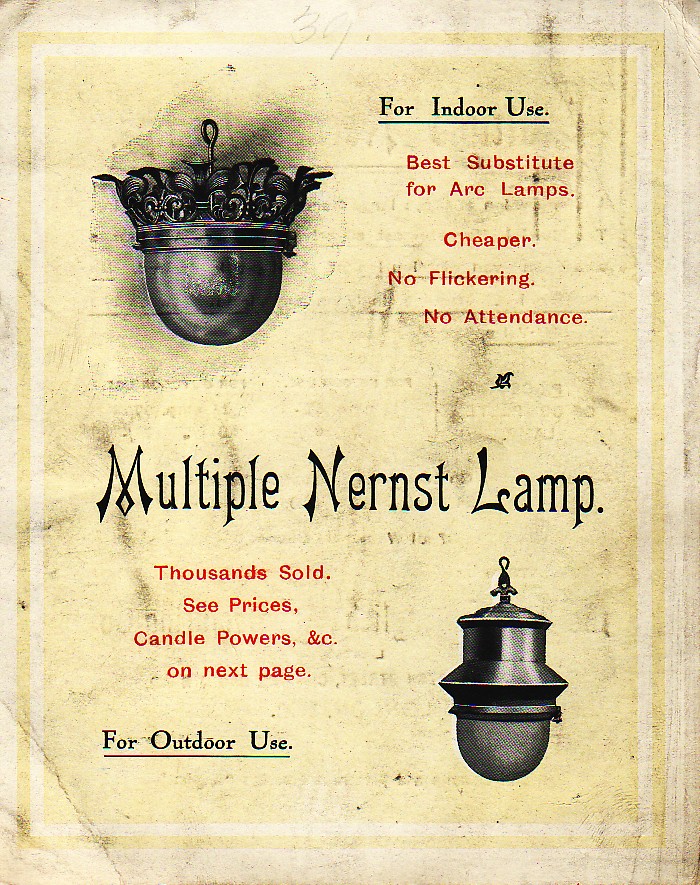
--"Mighty helpful," sneered Darby Suckling. "But heck, we all know the story by now." Chick Counterfly had already brought out of its storage locker a peculiar-looking optical contraption of prisms, lenses, Nernst lamps, and adjustment screw, into an appropriate receptacle of which he now carefully placed the pearl. Lindsay, still clutching his jaw in dental discomfort and muttering aggrievedly, lowered the shades in the dining saloon against the tropical noontide, and the boys directed their attention to a reflective screen set on one bulkhead, where presently, like a photographic image emerging from its solution, a printed message began to appear.

--Through a highly secret technical process, developed in Japan at around the same time Dr. Mikimoto was producing his first cultured pearls, portions of the original aragonite--which made up the nacreous layers of the pearl--had, through "induced paramorphism," as it was known to the artful sons of Nippon, been selectively changed here and there to a different form of calcium carbonate--namely, to microscopic crystals of the doubly-refracting calcite know as Iceland spar. Ordinary light, passing through this mineral, was divided into two separate rays, termed "ordinary" and "extraordinary," a property which the Japanese scientists had then exploited to create an additional channel of optical communication wherever in the layered structure of the pearl one of the thousands of tiny, cunningly-arranged crystals might occur. When illuminated in a certain way, and the intricately refracted light projected upon a suitable surface, any pearl so modified could thus be made to yield a message.
--To the fiendishly clever Oriental mind, it had been but a trivial step to combine this paramorphic encryption with the Mikimoto process, whereupon every oyster at the daily markets of the world suddenly became a potential carrier of secret information. If pearls so modified were then further incorporated into jewelry, reasoned the ingenious Nipponese, the necks and earlobes of rich women in the industrial West might provide a medium even less merciful than the sea into whose brute flow messages of yearning or calls for help sealed in bottles were still being dropped and abandoned. What deliverance from the limitless mischief of pearls, what votive offering in return for it, would be possible?


--Thomas Pynchon, Against the Day
